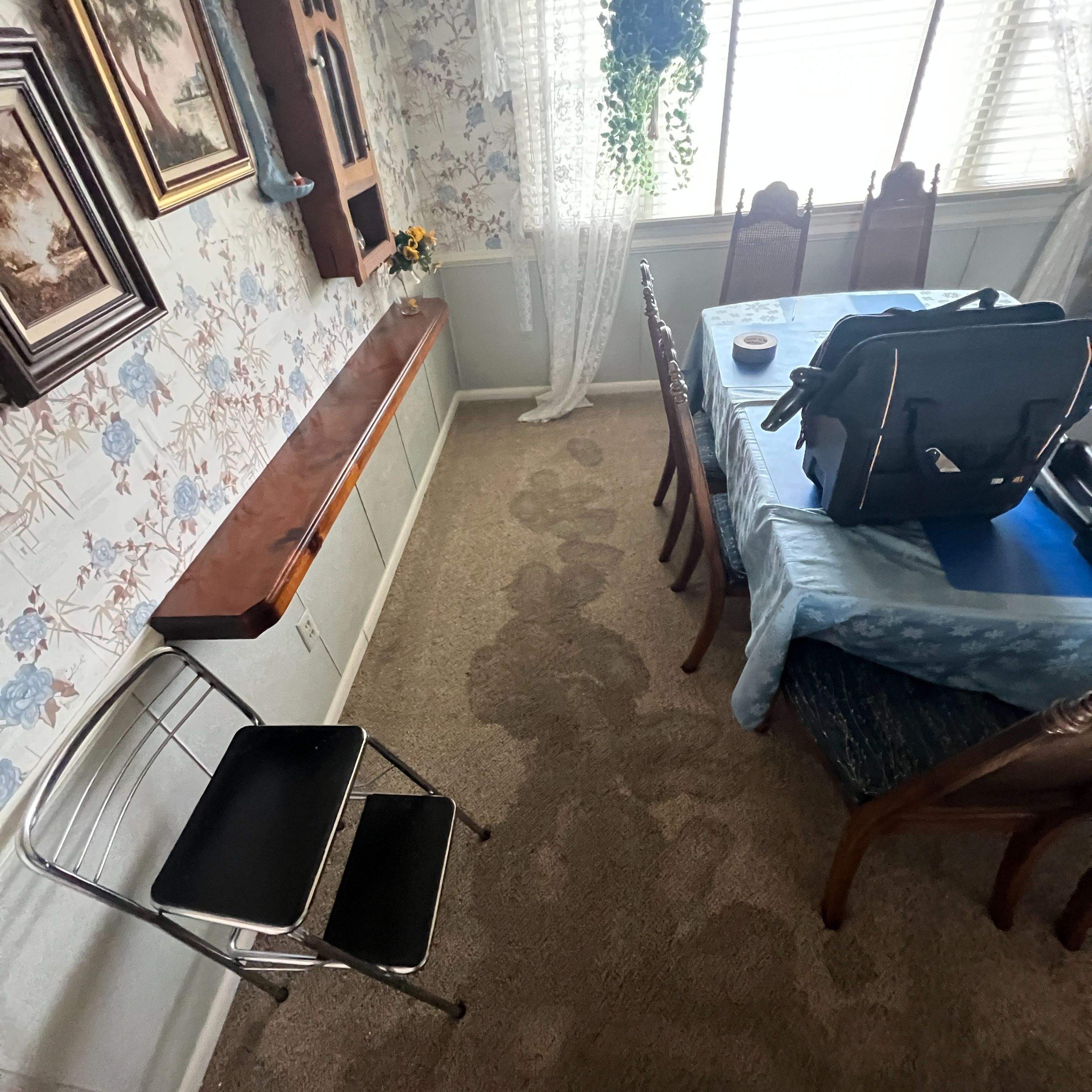
Why Window Leaks Behave Differently Than Other Water Intrusions
A burst pipe dumps clean water at a known rate from a known location. A roof leak generally tracks down rafters in a predictable line. Storm-driven window leaks are different because the water enters under pressure, finds the path of least resistance, and often travels horizontally before it reveals itself. In a Featherstone home with vinyl siding and OSB sheathing, water that breaches a window flange can run six to eight feet along the top plate before dripping down inside a wall. You see a stain in the dining room. The actual leak is in the bedroom.
This lateral travel is why we use thermal imaging and pin-type moisture meters on every window leak inspection. Visible damage almost always understates the saturation footprint. We routinely find moisture readings above 20 percent in framing members three to four feet away from the apparent stain, and that is the threshold where microbial growth begins within 48 hours. If your storm hit on a Friday and you call us on Monday morning, mold spores are already establishing colonies behind the drywall. That is not a scare tactic, it is the timeline the IICRC S500 standard is built around.
The pressure dynamic also matters. Wind-driven rain at 40 mph generates roughly 4 pounds per square foot against a window assembly, which is enough force to push water uphill through a failed sealant joint, past a weep hole that has been painted over, or around a flashing detail that was never properly integrated with the housewrap during construction. Older Featherstone homes built before the mid-1990s often lack the secondary drainage plane that modern codes require, which means a single compromised caulk bead becomes the entire defense against intrusion. When that bead fails during a storm, water does not trickle in, it gets driven.
The other factor specific to window intrusion is water category. Rainwater starts as Category 1 (clean), but the moment it passes through insulation, contacts framing treated with preservatives, or sits more than 24 hours, it degrades to Category 2 (gray). Once it reaches the subfloor and mixes with construction dust, pet dander, and any existing biological activity, you are looking at Category 2 cleanup at minimum. This category shift is what drives the cost differences you will see below, and it is the single biggest reason waiting to call costs you money.
Window Leak Storm Damage: Severity, Timeline, and Cost Comparison
The table below reflects what we actually charge and what we actually find on storm-intrusion calls across central Indiana. Numbers vary by home size, age, and how long the water sat, but these ranges give you a realistic frame for the conversation with your adjuster.
| Severity Level | What You See | Hidden Damage Footprint | Drying Timeline | Typical Cost Range | Insurance Outcome |
|---|---|---|---|---|---|
| Minor (Class 1) | Damp sill, small paint bubble, less than 2 sq ft of visible staining | Window flange, 6-12 inches of drywall behind trim, possibly sill plate | 2-3 days with targeted air movers and dehumidifier | $750 to $1,800 | Often under deductible; document for future claims |
| Moderate (Class 2) | Wet carpet edge, stained drywall 3-6 sq ft, soft baseboard | Insulation saturation, subfloor edge, 2-4 ft of wall cavity, possible header involvement | 4-6 days with containment and HEPA filtration | $2,400 to $5,800 | Typically covered; sudden and accidental clause applies |
| Major (Class 3) | Ceiling stain below window, warped flooring, visible mold spotting | Multiple wall cavities, subfloor delamination, ceiling joists, electrical box moisture | 7-12 days with controlled demolition and structural drying | $6,500 to $14,000 | Covered with proper documentation; mold rider may apply |
| Severe (Class 4) | Multiple rooms affected, hardwood cupping, visible mold colonies, musty odor throughout | Hardwood, plaster, framing, possible structural rot if leak is chronic | 14-21 days with full mitigation protocol | $15,000 to $40,000+ | Covered if sudden; chronic leaks often denied as maintenance |
The pattern in this table is what every Featherstone homeowner needs to understand. The visible damage in column two is rarely more than 10 to 20 percent of the actual saturation footprint in column three. We have walked into homes where the owner pointed at a six-inch stain and we left with 14 linear feet of wall opened up, because the moisture meter does not lie. This is also why we are firm about the 48 to 72 hour window. Class 1 damage caught Friday night is Class 2 by Monday and Class 3 by the following weekend if the cavity stays wet. The cost progression is not linear, it accelerates because each category change adds antimicrobial treatment, containment, and often mold remediation after the initial water damage.
Insurance behavior follows the same pattern. A sudden storm event documented within 24 to 48 hours is almost always covered under the standard sudden-and-accidental language in your policy. A leak that has clearly been active for months, evidenced by tannin staining patterns and established mold colonies, gets denied as a maintenance issue. The honest middle ground is the moderate case, where we help you build the documentation file (moisture maps, photos, scope of work) that turns a borderline claim into an approved one. If you are dealing with broader storm damage across the property, the window intrusion is often just one line item in a larger claim that may also involve roof, gutter, and siding components. Hidden saturation is the area where most adjusters underpay, so a thorough hidden leak detection inspection protects your interests before you sign anything.
One last note on the table. The drying timelines assume professional equipment running continuously. A box fan from your garage will not move enough air to drop the wall cavity below the 16 percent moisture threshold, and a consumer dehumidifier pulls maybe 25 pints per day against our commercial units that pull 130 to 240. The math does not work, and the cavity stays wet long enough for the category to shift.
What To Do In The First Hour After You Spot A Window Leak
Before Featherstone Water Restoration arrives, the actions you take in the first hour materially change the final cost. Pull back any carpet or rug within four feet of the window and lift it off the tack strip so the pad does not wick further. Move furniture away from the wall and pop the baseboard with a pry bar if you can do so without damaging trim, because that single move accelerates cavity drying by a full day. Photograph everything from multiple angles before you touch it, including timestamps. Then call us. Documentation done in the first hour is worth more than any argument you will have with an adjuster three weeks later.